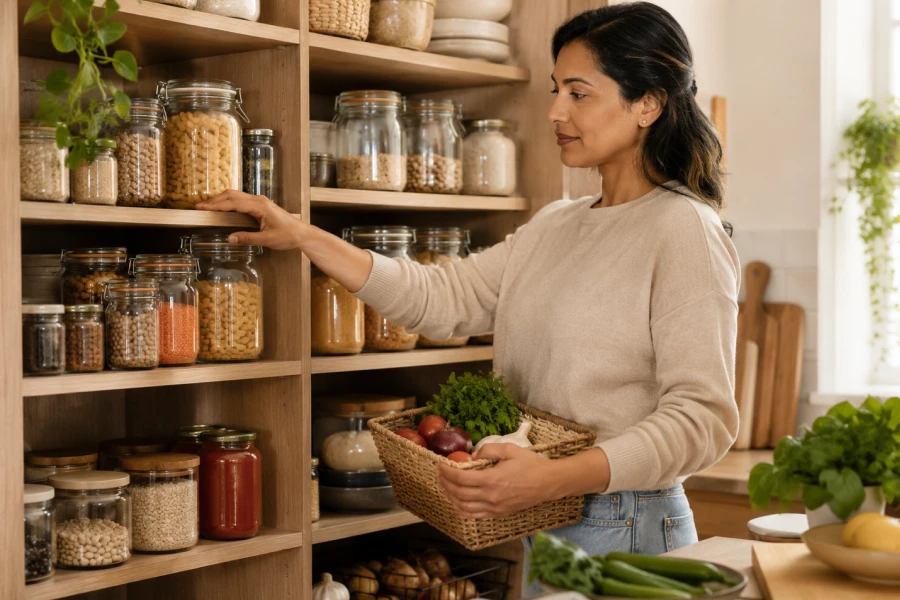
A well-stocked pantry can make ordinary evenings feel much more manageable. Meal planning with pantry staples begins with knowing what your shelves can reliably offer. That does not mean buying every ingredient or cooking the same meals repeatedly. It means keeping a flexible base that turns into dinner with a few fresh additions. Beans, grains, pasta, canned tomatoes, broths, spices, and sauces can do a great deal. The key is to connect those basics with meals you genuinely enjoy. Once the connection is clear, shopping becomes more focused and less reactive. You can build dinner from what is already waiting at home. That sense of readiness makes weeknights feel less fragile. A clear shelf often creates a calmer mind, too.
Pantry planning works best when you begin with foods you already use. List the shelf-stable ingredients that regularly disappear from your kitchen. Then connect each one to two or three dependable meals. A recipe filing method makes those connections easy to revisit. Pasta can become a quick baked dish, a simple soup, or a sauce-based dinner. Canned beans can support bowls, tacos, salads, and skillet meals. Rice can become a side, a base, or a way to stretch leftovers. This approach gives ordinary ingredients more than one job. You do not need endless variety to avoid boredom. You need a few reliable combinations that feel easy to make.
Begin with a foundation that suits the way your household eats. Choose a few grains, canned goods, sauces, spices, and frozen items you reach for often. Keep quantities realistic, especially if storage space is limited. A packed shelf can still feel disorganized if nothing has a purpose. Group similar foods together so you can see options quickly. Put older items toward the front before buying replacements. Store backup ingredients where they are easy to notice. That visibility helps prevent duplicate purchases and forgotten cans. Familiar basics create a dependable starting point for every meal. When the base is useful, fresh ingredients can become the exciting part.
Shopping is easier when fresh ingredients have a clear role beside pantry basics. Choose vegetables, proteins, and dairy products that support several planned meals. Buy herbs or produce with at least two uses in mind. A grocery list workflow makes those overlaps easier to spot before you leave home. For example, spinach can work in pasta, soup, eggs, and a grain bowl. A roasted chicken can become one dinner and several quick lunches. Plan with enough variety to feel appealing, but not so much that ingredients compete. This strategy keeps purchases focused and reduces waste. Your list should support the week, not reflect every passing craving. Thoughtful overlap gives the pantry more practical value.
Busy evenings need meals that do not require a new decision every ten minutes. Keep a few flexible formulas ready for those nights. Combine a grain, protein, vegetable, and sauce for a simple bowl. Turn canned tomatoes, broth, and beans into a fast soup. Use pasta, frozen vegetables, and cheese for an easy baked meal. A pantry organization strategy helps you see these options before reaching for takeout. The goal is not to avoid convenience. It is to make home cooking feel equally accessible. When the basics are visible, dinner has less power to derail the evening. A short list of fallback meals can protect your energy remarkably well.
Rigid plans often fail the moment one ingredient is unavailable. Learn a few simple substitutions that preserve the spirit of a meal. Use another bean, grain, green, or sauce when the original choice runs out. Keep recipes flexible enough to welcome what needs using first. A flexible meal calendar supports that kind of adjustment without creating confusion. Label meals by method or mood rather than only by exact ingredients. A cozy soup night can accommodate many vegetables and proteins. A pasta night can welcome different sauces or toppings. Substitutions become easier when the meal formula is familiar. Flexibility turns a pantry into a tool rather than a fixed inventory.
Organizing the pantry creates a small daily signal that meals are possible. It reduces the feeling that every dinner requires a fresh start. You become more aware of what you own and what needs using soon. That awareness can change the way you shop, cook, and save recipes. A clear shelf also makes it easier for other household members to help. They can see ingredients without asking where everything lives. Keep the setup simple enough to maintain during ordinary weeks. Perfection is not necessary for the system to work. A few dependable basics and visible options are enough. When the pantry supports you, the entire kitchen feels more prepared.




Leave a comment