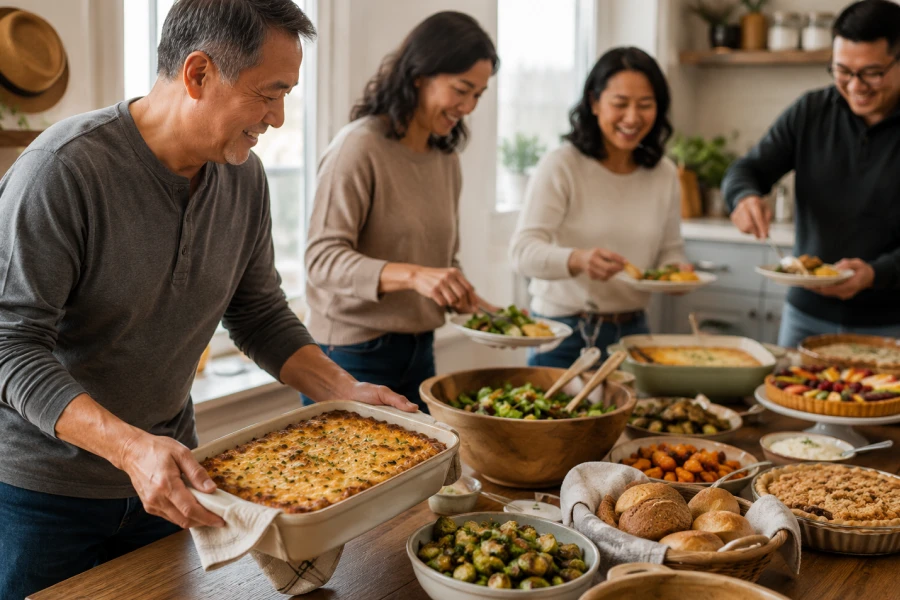
A comfort food potluck menu succeeds when every dish feels connected but not identical. People come hungry for familiar flavors, easy conversation, and a reason to linger. The best menus balance dependable favorites with a few thoughtful surprises. They also account for timing, serving space, and the way guests actually eat. Start with food that invites second helpings rather than complicated explanations. Choose recipes with warm flavors, flexible portions, and simple presentation. That approach keeps the meal approachable for both cooks and guests. It also makes contributions easier to divide among several people. A relaxed menu leaves room for preferences without losing its identity. When the choices feel intentional, the gathering immediately feels more generous.
Comfort food creates an immediate sense of recognition at the table. It gives guests a starting point before the first conversation even begins. A holiday potluck planner can help you build around that dependable feeling. Choose one hearty centerpiece that carries the meal without demanding attention. Add sides that bring color, contrast, and familiar textures. Roasted vegetables, creamy casseroles, fresh salads, and good bread work beautifully together. Keep flavors clear enough that every dish has a purpose. Too many competing sauces can make the table feel confusing. A focused spread looks abundant even when it stays manageable. Guests usually remember the comforting balance, not the number of recipes.
Every satisfying potluck benefits from one dish that grounds the rest. It might be baked pasta, slow-cooked chicken, a hearty chili, or a vegetable pie. That centerpiece gives people a clear picture of the meal. From there, choose side dishes that add freshness and texture. One crisp salad can brighten several richer plates. A starchy side offers fullness without requiring another complicated protein. Dessert should feel easy to serve and easy to share. Let the anchor dish guide your flavor choices rather than dictating every bite. The table will feel cohesive when dishes support one another. A strong center makes every guest contribution easier to place.
Menus become easier when each item solves a specific need. One dish adds substance, another brings vegetables, and another gives the meal brightness. Bread, grains, or potatoes create a comforting base for guests with bigger appetites. A dessert offers a natural final moment without requiring extra ceremony. Use a potluck prep timeline to identify which foods need the most attention. That planning step helps prevent five dishes that all demand oven space. It also reveals when one category is missing from the meal. Keep the menu readable in your own mind. If you cannot explain the purpose of a dish, you may not need it. Clarity turns a full table into a balanced one.
Guests arrive at different times, and food rarely follows a perfect schedule. Prioritize recipes that hold well after transport and short waits. Warm dishes should reheat without losing their appeal. Cold dishes should remain crisp enough to feel fresh. Containers should be easy to open, serve from, and take home. Avoid fragile toppings that collapse before people reach the table. Put final garnishes in a small separate container when possible. That choice saves both texture and presentation. A simple serving plan helps protect these details without adding pressure. Food that travels gracefully lets the host concentrate on people instead of logistics.
Even the clearest plan benefits from a little room to adapt. Someone may bring an unexpected dessert or arrive with extra bread. Another guest may need a vegetarian option you did not anticipate. Treat those changes as useful additions, not disruptions. Leave a little space in the menu for a last-minute complement. A bowl of fruit, a simple dip, or extra greens can balance richer dishes. Keep labels simple when ingredients may be unclear. Guests appreciate knowing what they are choosing without making a scene. Flexibility helps the gathering feel abundant rather than tightly controlled. A menu works best when it can welcome what people bring.
Dessert often shapes the last feeling guests take from the table. Choose something easy to slice, spoon, or pass around. Warm cookies, fruit crisps, brownies, and simple cakes usually work better than intricate pastries. Offer coffee, tea, or a cold drink nearby to make lingering feel natural. Do not rush to clear every plate the moment people finish. A few shared bites can extend the evening beautifully. Let the table stay a little imperfect while conversations continue. The goal is not to perform hospitality with precision. It is to create an atmosphere where guests feel welcome staying awhile. That final ease turns dinner into a memory people want to repeat.


Leave a comment