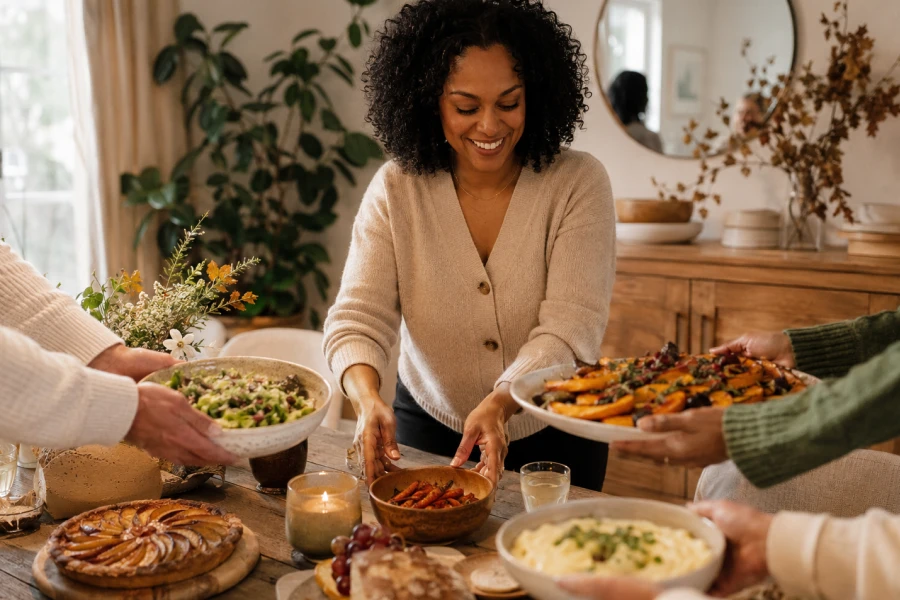
Good potlucks feel generous long before the first platter reaches the table. Cozy potluck planning works because it turns many small choices into a welcoming rhythm. Instead of guessing, you decide what belongs together and what can wait. That shift protects your energy during the days before guests arrive. It also helps people contribute without feeling unsure about their role. A relaxed gathering does not demand restaurant-level precision or endless recipes. It needs a clear mood, a simple menu, and enough flexibility. Start by imagining how guests will move, eat, and linger together. Then build the food around comfort, familiarity, and easy serving. The result feels warm because the host is not carrying every decision alone.
Before inviting anyone, choose the scale that suits your space and schedule. Six guests and sixteen guests create very different cooking days. A cozy gathering system helps you name the occasion before shopping begins. Decide whether dinner happens seated, buffet-style, or around a coffee table. That choice shapes portions, plates, serving tools, and the number of dishes. Keep the first menu conversation intentionally narrow. Pick one anchor dish, two dependable sides, and one easy sweet finish. Guests can fill the remaining gaps with clear, useful contributions. This structure eliminates the vague question of what everyone should bring. More importantly, it gives the gathering a recognizable point of view.
Potluck success depends less on abundance than balanced contributions. Start by asking people to bring categories rather than unspecified favorites. One person handles a salad, another brings bread, and someone covers dessert. Shared dish coordination prevents five dips and no main course. It also gives guests permission to choose something they can make well. Offer a few gentle notes about portions, temperatures, and transport. Avoid assigning elaborate projects to people with limited time. A simple casserole, chopped vegetables, or bakery dessert can still feel thoughtful. Your role is to create harmony, not judge anyone’s cooking. When contributions complement each other, the table feels generous without becoming crowded.
Comfort food earns its place when it stays appealing after a short wait. Think roasted vegetables, baked pasta, braised proteins, sturdy salads, and unfussy desserts. Dishes should survive a car ride without turning into a stressful rescue mission. Consider how each recipe holds its texture, temperature, and serving appeal. A few dependable comfort food menu ideas can simplify every later decision. Avoid menus that depend on minute-by-minute finishing or fragile plating. Put sauces, garnishes, and crisp toppings on the side when possible. That small adjustment lets guests serve themselves without damaging the dish. It also means you can greet people instead of hovering over the oven. Food that waits well gives the evening room to unfold naturally.
Every group includes different appetites, traditions, and levels of adventurousness. A useful menu welcomes those differences without becoming an impossible puzzle. Begin with one familiar centerpiece that most guests will recognize. Add vegetables, starches, and condiments that create easy choices around it. You do not need separate meals for every person. Instead, offer components that allow people to build a plate comfortably. Keep any dietary notes short, direct, and kind. Guests appreciate clarity more than dramatic menu explanations. A few adaptable sides can make everyone feel considered. That sense of ease is often what people remember most. Thoughtful choices make the meal feel inclusive without making the host overextend.
Small deadlines make preparation feel calmer because they protect the final afternoon. Three days before, finalize the menu and confirm contributions. Two days before, buy shelf-stable ingredients and serving supplies. The day before, chop vegetables, bake desserts, and clear refrigerator space. A make-ahead potluck dishes approach reduces the number of tasks competing for attention. On the gathering day, focus on reheating, setting the table, and welcoming people. Keep one short list visible for the last hour. It should include only essential actions, not every possible improvement. A realistic timeline prevents the familiar temptation to do too much. Once the basics are ready, stop refining and let the evening begin.
People notice when a host has enough room to enjoy the gathering. They also notice when every question sends someone rushing into another room. Keep serving tools, napkins, water, and trash access visible from the start. Put one reliable person in charge of music or drinks if needed. Arrange food so guests can help themselves without asking for constant directions. Leave a little empty space on the table for late arrivals. Accept that a dish may cool slightly or a guest may forget something. Those moments rarely damage the mood. What matters is the welcome, the shared meal, and the pace. A good potluck feels cared for because everyone has space to settle in.


Leave a comment